1
/
of
4
floristaAsia
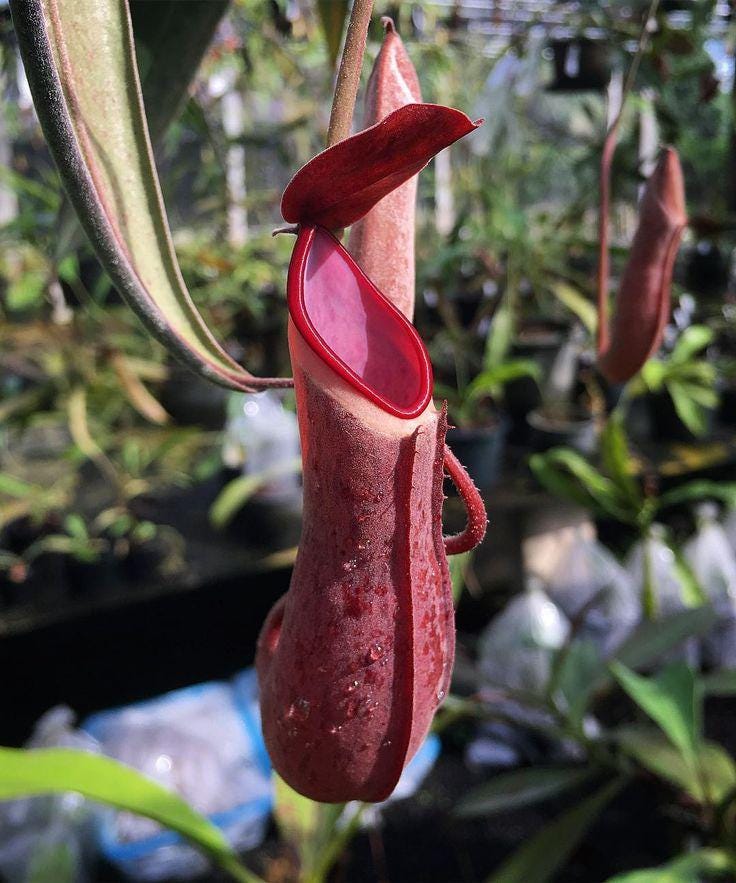
Rare Nepenthes albomarginata: Tropical Pitcher Plant
Rare Nepenthes albomarginata: Tropical Pitcher Plant
Regular price
$20.00 USD
Regular price
$0.00 USD
Sale price
$20.00 USD
Shipping calculated at checkout.
Quantity
Couldn't load pickup availability
Nepenthes albomarginata tropical pitcher plant- Rare Nepenthes , Exotic pitcher's plant, Perfect Gift for Plant Collectors (seedpod)
1 seedpod can give any seedling plant 50-100 plant
✅ Taxonomy & Name Origin
Genus: Nepenthes
Species: albomarginata
Authority: T.Lobb ex Lindl.
Name meaning: "albo" (white) + "marginata" (margin) - refers to the distinctive white band near the pitcher's peristome.
✅ Natural Habitat
Native range: Borneo, Sumatra, Peninsular Malaysia.
Altitude: Typically sea level to 1,200 m.
Habitat: Lowland to lower montane forests, often on sandy or rocky soils, in open sunny spots or light forest.
✅ Distinctive Features
Pitchers:
Shape: Cylindrical to slightly funnel-shaped.
Size: 10-15 cm tall (can reach up to 20 cm).
Color: Usually green to reddish-brown; notable white band of trichomes just below the peristome.
Function of white band: Attracts termites - a unique mutualistic adaptation. Termites gather there and fall into the pitcher.
Leaves: Long, lanceolate, bright green.
Growth habit: Climbing vine, produces tendril-bearing leaves.
✅ Unique Ecological Role
The white band secretes a substance that attracts termites, which serve as a major prey source. This is a rare specialization among Nepenthes.
✅ Cultivation Requirements
Temperature: Prefers lowland conditions (warm: 25-32 °C day, 18-24 °C night).
Humidity: High humidity (70-90%) essential.
Light: Bright filtered light (50-70% shade).
Water: Use pure water (RO or rainwater), keep medium moist but well-drained.
Soil mix: Loose, airy medium (e.g., sphagnum moss + perlite + orchid bark).
Feeding: Occasional live/freeze-dried insects if grown indoors.
✅ Interesting Facts
Termite specialization makes it one of the few Nepenthes species with a strong prey preference.
Often cultivated by enthusiasts due to its distinct white margin and unique ecological behavior.
1 seedpod can give any seedling plant 50-100 plant
✅ Taxonomy & Name Origin
Genus: Nepenthes
Species: albomarginata
Authority: T.Lobb ex Lindl.
Name meaning: "albo" (white) + "marginata" (margin) - refers to the distinctive white band near the pitcher's peristome.
✅ Natural Habitat
Native range: Borneo, Sumatra, Peninsular Malaysia.
Altitude: Typically sea level to 1,200 m.
Habitat: Lowland to lower montane forests, often on sandy or rocky soils, in open sunny spots or light forest.
✅ Distinctive Features
Pitchers:
Shape: Cylindrical to slightly funnel-shaped.
Size: 10-15 cm tall (can reach up to 20 cm).
Color: Usually green to reddish-brown; notable white band of trichomes just below the peristome.
Function of white band: Attracts termites - a unique mutualistic adaptation. Termites gather there and fall into the pitcher.
Leaves: Long, lanceolate, bright green.
Growth habit: Climbing vine, produces tendril-bearing leaves.
✅ Unique Ecological Role
The white band secretes a substance that attracts termites, which serve as a major prey source. This is a rare specialization among Nepenthes.
✅ Cultivation Requirements
Temperature: Prefers lowland conditions (warm: 25-32 °C day, 18-24 °C night).
Humidity: High humidity (70-90%) essential.
Light: Bright filtered light (50-70% shade).
Water: Use pure water (RO or rainwater), keep medium moist but well-drained.
Soil mix: Loose, airy medium (e.g., sphagnum moss + perlite + orchid bark).
Feeding: Occasional live/freeze-dried insects if grown indoors.
✅ Interesting Facts
Termite specialization makes it one of the few Nepenthes species with a strong prey preference.
Often cultivated by enthusiasts due to its distinct white margin and unique ecological behavior.
Share